[Anchor]
Now, let's go to Switzerland, where working-level talks are underway following the high-level meeting.
Correspondent Kwon Young-in, this was the first meeting held under the previous memorandum of understanding. It sounds like the atmosphere was not exactly smooth, is that correct?
[Reporter]
Yes, I am here in Bürgenstock, Switzerland, where the talks between the U.S. and Iran are taking place.
The meeting was delayed by two days as Israel continued its military operations in Lebanon, and even after it was finally convened, the process was far from smooth.
After U.S. President Trump threatened on social media that he would strike Iran hard again if it failed to restrain Hezbollah, the Iranian delegation walked out of the negotiation room just 80 minutes after the talks began.
It seemed as though the talks might collapse, but the Iranian delegation returned to the negotiating table following mediation by Qatar and Pakistan.
However, the meeting, which began without even a handshake, concluded without a joint statement from the U.S. and Iran, leaving only a statement from the mediating countries.
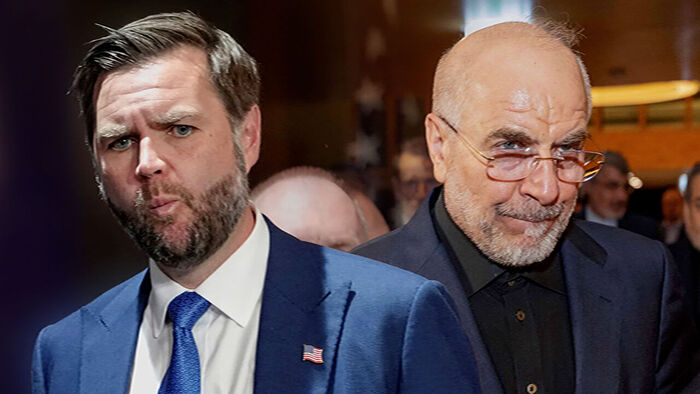
Iranian Parliament Speaker Ghalibaf and others have returned to Iran, while the movements of the U.S. delegation, including Vice President Vance, have not yet been disclosed.
[Anchor]
Iran immediately claimed the negotiations were a success, but has the U.S. delegation released any statement yet?
[Reporter]
No, unlike Iran, the U.S. has yet to make any public comments regarding the results of this first high-level meeting.
Analysts suggest that the outcome of the high-level talks likely fell short of U.S. expectations. Most notably, the two sides failed to flesh out any concrete negotiations regarding nuclear disarmament during this first round.
The joint statement from the mediating countries mentions only that nuclear issues will be addressed in future group-level negotiations, such as those concerning sanctions and dispute resolution, with no further details.
This situation stems from the ongoing conflict between Israel and the Lebanese militant group Hezbollah.
Although U.S. President Trump has repeatedly pressured Israeli Prime Minister Netanyahu, it has had no effect. His attempt to hold Iran accountable this time only brought the negotiations to the brink of collapse.
Ultimately, the first high-level meeting served only to "put out immediate fires," such as the Lebanon crisis and ensuring freedom of navigation in the Strait of Hormuz.
While they agreed to establish a mechanism to ease tensions in Lebanon, it remains uncertain whether Israel and Hezbollah will participate. There are also concerns that Iran will continue to use the threat of blocking the Strait of Hormuz as leverage in negotiations.
Questions are already being raised about whether a nuclear disarmament agreement can realistically be reached within 60 days.
(Reported by Kim Si-nae | Video by Kim Byeong-jik)
※ Please note: This article was translated by AI and may contain errors.
Nuclear Disarmament Off the Table? First High-Level Talks Focus Only on Immediate Crisis
Jun 22, 2026